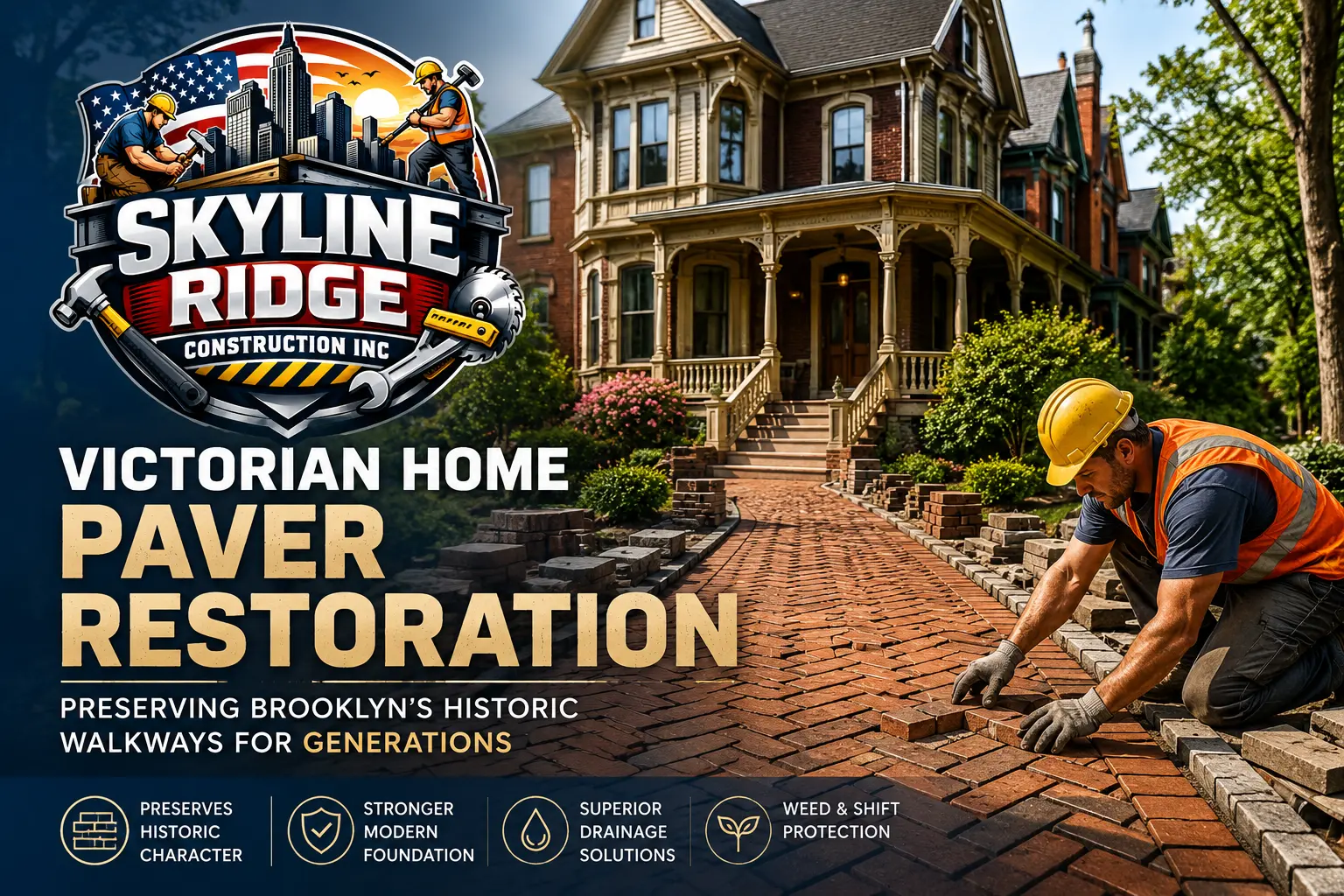
Victorian Home Paver Restoration: Maintaining Brooklyn’s Historic Charm
Across historic Brooklyn neighborhoods like Ditmas Park, Flatbush, and Clinton Hill, Victorian-era homes stand as magnificent architectural treasures. Characterized by their ornate wooden wrap-around porches, steep gabled rooflines, and decorative asymmetrical facades, these properties are deeply tied to New York’s cultural heritage. Just as critical as the buildings themselves are the historic walkways, courtyards, and carriage driveways that frame them. Over a century of shifting earth, severe winters, and urban wear can leave these elegant entryways sunken, cracked, and overgrown. Investing in specialized Victorian home paver restoration is the ultimate way to preserve your property’s structural safety while maintaining Brooklyn’s historic charm.
Restoring old-world brick, bluestone, or cobblestone pathways around a Victorian estate requires a completely different level of craftsmanship than pouring a basic modern slab. Simply tearing out historic clay pavers and replacing them with standard modern blocks destroys the unique character and market value of the property.
This comprehensive guide breaks down the challenges of historic paving failure, the delicate engineering process behind professional restoration, and how to protect antique stone layouts for another century.
Table of Contents
The Core Challenges of Antique Pavement Failure
Unlike modern hardscapes built over engineered sub-bases, early 20th-century walkways were often laid directly over raw dirt, lime mortar beds, or basic sand mixtures. Over generations, these foundations suffer severe degradation:
1. Severe Ground Settling and Tree Root Heaving
The mature, historic oak and maple trees that line Brooklyn’s residential avenues feature massive underground root systems. As these roots grow, they exert immense pressure upward, bowing flat brick patterns into dangerous vertical trip hazards. Concurrently, decades of stormwater runoff wash away the uncompacted sub-soils beneath the paths, causing large sections of the pavement to sag, sink, and pool water.
2. Mortar Deterioration and Joint Erosion
Traditional clay bricks and natural stones rely on stable joints to remain locked together. As driving rain, melting snow, and harsh de-icing salts attack the path, the early lime-based mortar or loose packing sand erodes completely away. This leaves deep, open gaps between the stones, allowing invasive weeds, moss, and ant colonies to take over the layout, further pushing the antique pavers out of alignment.
3. Surface Spalling and Structural Fracturing
Historic clay pavers possess a fired outer protective crust. If property owners or past uncertified handymen spread corrosive rock salt across the path to clear winter ice, the chemicals rapidly break down the historic brick matrix. This triggers advanced spalling, where the beautiful face of the antique brick pits, scales, and crumbles away into dust.
Step-by-Step Victorian Home Paver Restoration Engineering for Historic Paths
True restoration involves reclaiming and salvaging as much of the original historic material as possible, combining old-world aesthetics with modern, heavy-duty structural foundations:
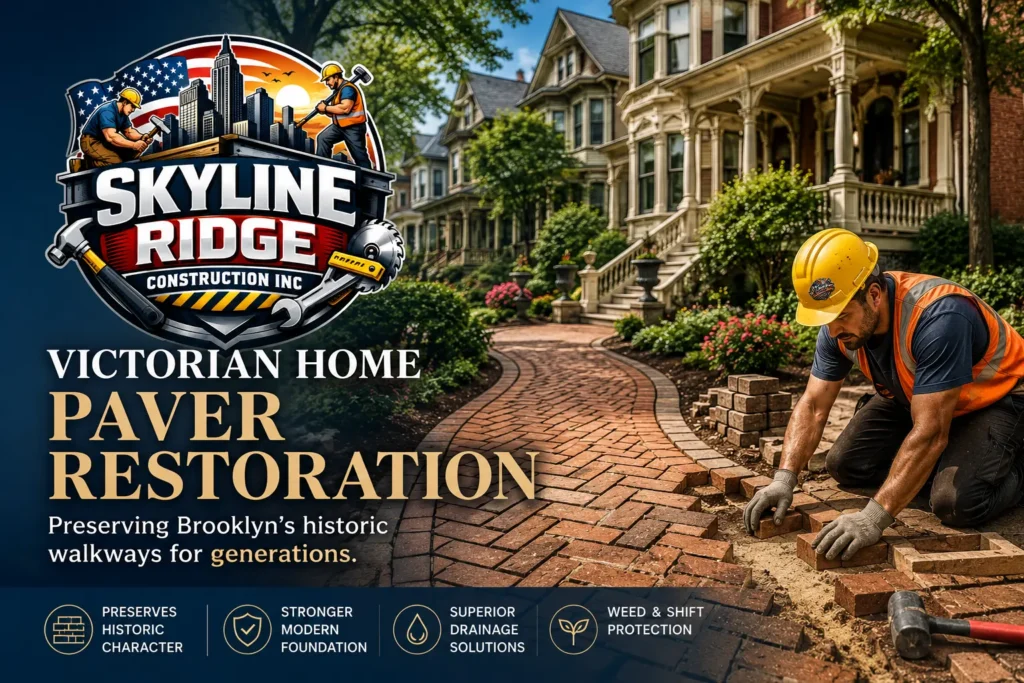
- Careful Uplifting and Cataloging: Elite masonry crews hand-extract the original antique bricks or bluestone slabs one by one. Each salvageable piece is carefully cleared of old mortar, cleaned of generations of dirt, and stacked safely for reinstallation.
- Deep Sub-Grade Excavation and Geotextile Laying: The old, failing dirt foundation is excavated down to solid sub-soil. A heavy-duty woven geotextile filter fabric is laid down across the trench to permanently block future weed growth and prevent native clay from mixing with the new gravel base.
- Compacting a Modern Aggregate Foundation: To ensure the walkway never sags again, contractors build a rock-solid 6-to-8-inch foundation of crushed aggregate stone, compacted in distinct layers using heavy industrial vibrating machinery.
- Re-Laying the Historic Pavers: The original antique stones are meticulously re-laid by hand into their historic architectural patterns (such as classic herringbone or basketweave), maintaining the home’s authentic historical footprint.
- Polymeric Sand Joint Stabilization: To finish the path, specialized polymeric jointing sand is swept into the seams and misted with water. This sand hardens into a durable yet flexible mortar-like seal that completely eliminates shifting, blocks weeds, and resists water erosion.
Balancing Architectural Style with Weather Endurance: Preserving antique building materials requires a deep understanding of how specific stone composites interact with New York’s harsh elements. While salvageable historic bricks offer irreplaceable character, any heavily damaged sections or new extensions must be integrated with premium materials built to handle modern stress. To see which structural stones provide the perfect blend of historical look and frost-proof resilience, explore our industry guide on The Best Paver Stones for NYC Weather: Durability Meets Style to protect your restoration investment.
Historic Restoration vs. Modern Replacement
| Project Criteria | Historic Paver Restoration Process | Total Modern Masonry Replacement |
| Architectural Impact | Preserves 100% historic character and neighborhood value | Alters the original aesthetic; can look out of place on historic properties |
| Material Management | Salvages and cleans original century-old bricks/stones | Sends original antique materials to a landfill |
| Foundation Quality | Upgraded to modern engineering standards (Compacted gravel base) | Built over a new modern aggregate foundation |
| Weed & Shift Prevention | Complete protection via modern polymeric sand joints | Complete protection via modern polymeric sand joints |
Complete Property Exterior Care Across NYC
At Skyline Ridge Construction Inc, we are deeply dedicated to preserving the structural integrity and historical beauty of New York City’s architectural neighborhoods. We combine traditional craftsmanship with advanced engineering, and we are fully licensed and equipped to manage your residential historic restorations, commercial roofing, and municipal concrete compliance.
Explore our primary professional services to see how we can assist you today:
- Pavers Services: We specialize in historic paver restorations, premium stone patios, custom interlocking driveways, traditional brickwork, and weatherproof porcelain layouts.
- Concrete Services: We specialize in structural foundations, custom entry stoops and stairs, basement waterproofing, concrete sealing, and clearing NYC DOT sidewalk violations quickly and legally.
- Roofing Services: From emergency leak repairs and protective flat roof coatings to complete roof replacements and custom chimney flashing, we keep your home dry.
Give Skyline Ridge Construction Inc a call today at +1 (646) 323-7703 to schedule a free estimate for your next historic paver restoration or exterior masonry project!
Areas We Serve
We proudly provide expert historic paver restorations, structural roofing, and premium hardscaping across the following unique New York City neighborhoods:
- Ditmas Park Center (Brooklyn)
- Flatbush South (Brooklyn)
- Clinton Hill North (Brooklyn)
- Prospect Lefferts Gardens East (Brooklyn)
- Midwood Park (Brooklyn)
- Crown Heights South (Brooklyn)
- Windsor Terrace West (Brooklyn)
- Astoria Heights East (Queens)
- Kensington Manor (Brooklyn)
- Sunnyside Gardens West (Queens)
FAQ’s
Is it possible to find matching bricks if some of my original historic pavers are completely broken?
Yes, absolutely. Professional historical restoration contractors maintain close ties with specialized architectural salvage yards across New York and the Tri-State area. If a portion of your Victorian path features crushed or missing clay bricks, we can source authentic, color-matched salvaged bricks from the exact same era to complete the pattern seamlessly.
How long does a typical Victorian walkway restoration project take to complete?
Because historic restoration relies on careful hand-extraction, cleaning, and precision relaying, it takes slightly longer than a standard new paver install. A typical residential front walkway and porch entry layout usually takes 3 to 5 days from initial excavation to the final joint sand locking.
What is the safest way to clear snow from restored antique brick paths?
Never use a metal-bladed shovel or aggressive steel scrapers on historic clay bricks, as they will easily chip the fragile antique edges. Always opt for a plastic shovel or a broom. Additionally, completely avoid rock salt (sodium chloride); instead, use clean sand for instant traction or highly specialized non-corrosive CMA ice melts.
Can uneven ground shifting around my historic walkways cause city violations?
Yes. If your historic front walkway stretches out to meet the public city sidewalk line, any severe tree root lifting or sunken stones that create a vertical gap greater than 1/2 inch can result in an official NYC DOT sidewalk violation. To ensure your street-front boundaries meet strict municipal code, view our detailed compliance checklist on NYC DOT Sidewalk Requirements: Avoiding Fines with Professional Concrete Work.
Get a Free Estimate Today
Looking for a top affordable roofing and concrete contractor in Brooklyn, New York?
Address: 8512 5th Ave, Brooklyn, NY 11209