Best Pool Deck Pavers in Queens: Creating a Slip-Resistant Summer Oasis
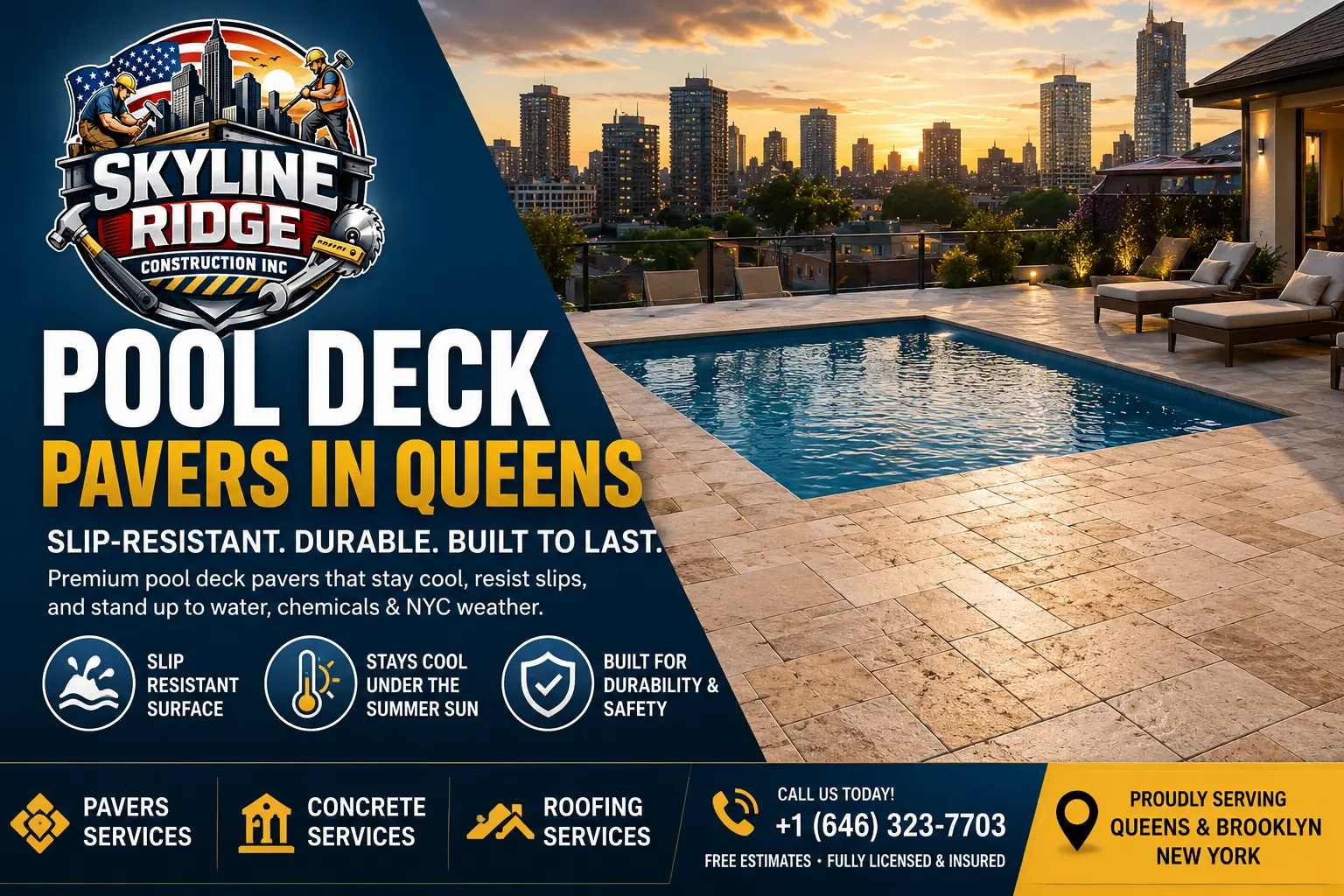
For homeowners across Queens, owning a residential swimming pool is the ultimate luxury during hot New York summer heatwaves. However, a backyard pool is only as safe and functional as the hardscape surface that surrounds it. Standard concrete surrounds get blisteringly hot, puddle water constantly, and become incredibly slick when wet. When upgrading your pool area, prioritizing structural safety and heat management is essential. Investing in premium pool deck pavers in Queens allows property owners to create a gorgeous, slip-resistant summer oasis that stands up to heavy foot traffic, water splashing, and chemical exposure.
Unlike solid poured concrete slabs that inevitably crack and create dangerous uneven trip hazards around water lines, interlocking stones offer a flexible, porous, and highly customizable pavement system.
This comprehensive guide breaks down the best slip-resistant paving materials, pool-side durability rules, and how to engineer a pool surround built for safety and style.
Table of Contents
Top 3 Slip-Resistant Paver Materials for Queens Pools
When choosing a stone texture for a pool surround, the material must score exceptionally high in two categories: slip-resistance (traction) and thermal comfort (cool underfoot).
1. Textured Interlocking Concrete Pavers
High-density interlocking concrete stones are highly favored for residential pool surrounds. Manufactured with specialized micro-textures, like a light sandblast or split-stone finish, they offer incredible grip even when completely covered in pool water and splash runoff. Furthermore, concrete pavers are highly resistant to pool chemicals like chlorine and saltwater, preventing premature surface scaling and fading.
2. Premium Travertine Pavers
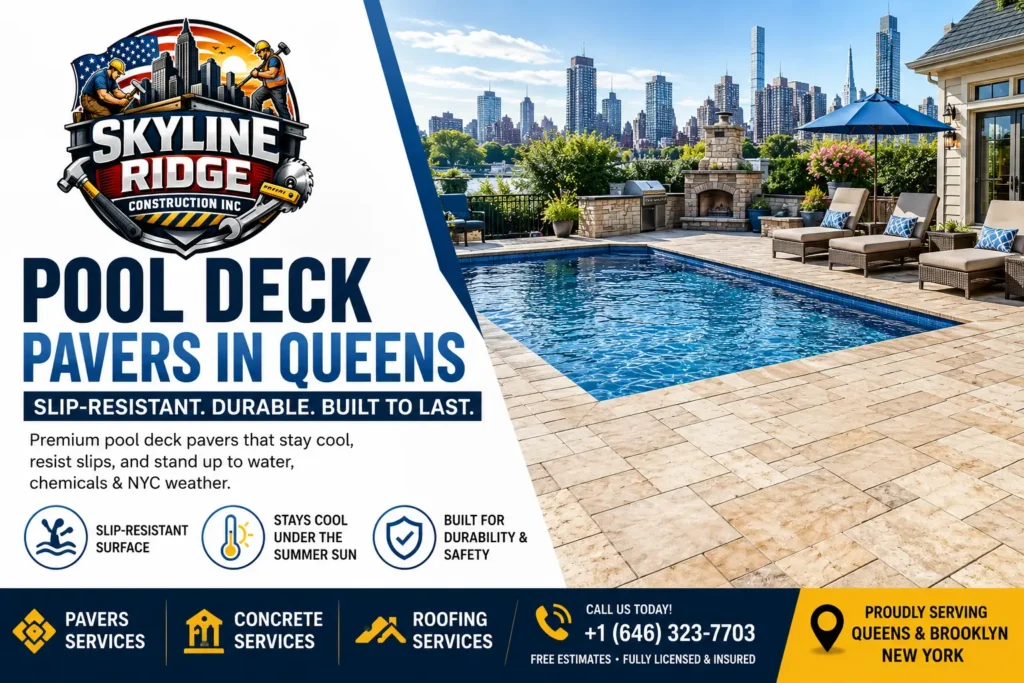
If you want a luxurious, high-end resort aesthetic, travertine is an exceptional natural stone choice. Travertine possesses a naturally porous, pitted surface that instantly absorbs surface water, making it incredibly slip-resistant for bare feet. Most importantly, travertine reflects solar heat rather than absorbing it, meaning the stones remain comfortably cool to the touch even under direct midday July sun exposure.
3. Architectural Porcelain Pavers
Outdoor-grade structural porcelain slabs are rapidly growing in popularity for modern, minimalist pool layouts. While standard indoor tile is slick, outdoor porcelain pavers feature a highly textured, slip-resistant matte rating (R11 or higher). They are completely non-porous, meaning they absorb zero moisture, resist chemical stains effortlessly, and are 100% frost-proof against New York winters.
Essential Engineering and Drainage Around Swimming Pools
A pool deck faces constant water saturation from splashing, backwashing, and heavy summer rainstorms. To prevent your stone layout from sagging or shifting, hardscape specialists follow strict installation rules:
- Precise Sloping and Drainage Pitch: The entire paver surround must be engineered with a highly precise slope (typically 1/4 inch of drop per linear foot) heading away from the pool coping. This channels water toward hidden strip drains or garden borders rather than allowing chlorinated water to puddle on the stones or flow back into the pool.
- Geotextile Ground Stabilization: A heavy-duty geotextile filter fabric is laid down across the excavated earth before aggregate is added. This separates the native soil from the new stone base, preventing the pavers from sinking over time due to ground water movement.
- Highly Compacted RCA Foundation: The sub-base requires at least 6 to 8 inches of Recycled Concrete Aggregate (RCA) compacted with industrial vibrating plate machinery. This aggregate foundation allows splashed water to drain through the joints naturally without eroding the ground under the pool deck.
Historic Property and Hardscape Continuity: Ensuring proper sub-base engineering and material selection is vital for heavy-duty social zones like backyard pools. If your property features older historic elements or structural stonework, any new hardscape extension must complement those original layouts while utilizing modern weatherproofing standards. To see how traditional masonry aesthetics can be seamlessly preserved and upgraded with advanced foundations, read our historical walkthrough on Victorian Home Paver Restoration: Maintaining Brooklyn’s Historic Charm to keep your property’s exterior fully aligned.
Pool Deck Pavers in Queens Material Compared
| Paver Material | Slip-Resistance Level | Heat Absorption Level | Chemical & Frost Resistance |
| Textured Concrete | Extremely High | Moderate (Depends on color) | Ultra-High (Handles chlorine/salt) |
| Natural Travertine | High | Lowest (Stays cool under sun) | High (Requires penetrating sealer) |
| Outdoor Porcelain | High (Matte Textured) | Moderate to Low | 100% Impervious (Stain-proof) |
| Standard Poured Concrete | Low (When wet) | High (Absorbs heat quickly) | Moderate (Prone to cracking/scaling) |
Complete Property Exterior Care Across NYC
At Skyline Ridge Construction Inc, we focus on enhancing and protecting your entire building envelope from the highest rooflines down to your backyard pool oasis. We are fully licensed, locally operated, and equipped to manage your residential structural home improvements, commercial roofing, masonry restorations, and DOT concrete compliance.
Explore our primary professional services to see how we can assist you today:
- Pavers Services: We design and install premium stone paver patios, custom pool decks, interlocking driveways, historic paver restorations, and traditional brickwork built to survive harsh winters.
- Concrete Services: We specialize in high-strength concrete structures, custom entry stoops and stairs, structural foundations, basement waterproofing, and clearing NYC DOT sidewalk violations quickly and legally.
- Roofing Services: From emergency leak repairs and protective flat roof coatings to complete roof replacements and custom chimney flashing, we keep your home dry.
Give Skyline Ridge Construction Inc a call today at +1 (646) 323-7703 to schedule a free estimate for your next pool deck paver or backyard renovation project!
Areas We Serve
We proudly provide expert local pool deck paver installations, structural roofing, and premium hardscaping across the following unique New York City neighborhoods:
- Astoria Heights West (Queens)
- Kensington Heights South (Brooklyn)
- Jackson Heights West (Queens)
- Midwood Manor East (Brooklyn)
- Rego Park North (Queens)
- Dyker Heights Park (Brooklyn)
- Sunnyside East (Queens)
- Bath Beach East (Brooklyn)
- Ridgewood North (Queens)
- Mapleton West (Brooklyn)
FAQ’s
What type of joint sand should be used around a swimming pool deck?
Standard loose sand will wash away instantly from pool splashing and heavy hose washdowns. Hardscape professionals always use high-quality polymeric sand or specialized permeable joint compounds. Once activated with water, this sand hardens into a flexible, rubber-like mortar seal that stays locked in the joints, blocks weeds, and resists water erosion perfectly.
How long does it take a professional team to install a new paver pool deck?
For an average-sized residential backyard pool surround, demolition of the old surface, deep excavation, base compaction, stone laying, and joint locking typically takes 4 to 6 days depending on the complexity of the design and backyard accessibility.
Why is high compressive strength critical for exterior paving stones?
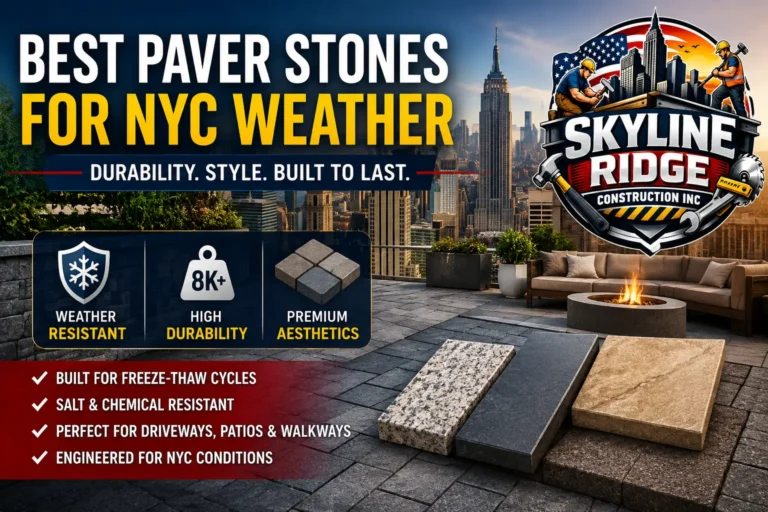
High-density paving stones built with a compressive strength of 8,000 PSI or greater absorb almost zero water compared to standard poured concrete. This low absorption prevents the destructive freeze-thaw cycle from cracking the stones during winter drops. To see how frost-resistant materials shield your hardscape from severe seasonal damage, view our essential material breakdown on The Best Paver Stones for NYC Weather: Durability Meets Style.
Can a leaking pool or broken backyard drainage cause trouble with city sidewalks?
Yes, absolutely. If a backyard pool deck slopes incorrectly or suffers from extensive underground water leaks, thousands of gallons of unmanaged water can travel beneath your property, eroding the sub-soil beneath your front sidewalk flags. This causes the sidewalk to crack or sag, leading to dangerous trip hazards and expensive city penalties. To make sure your property boundaries remain fully compliant with municipal codes, view our comprehensive guide on NYC DOT Sidewalk Requirements: Avoiding Fines with Professional Concrete Work.
Get a Free Estimate Today
Looking for a top affordable roofing and concrete contractor in Brooklyn, New York?
Address: 8512 5th Ave, Brooklyn, NY 11209