Interlocking Pavers vs. Bricks: Durability and Style Comparison
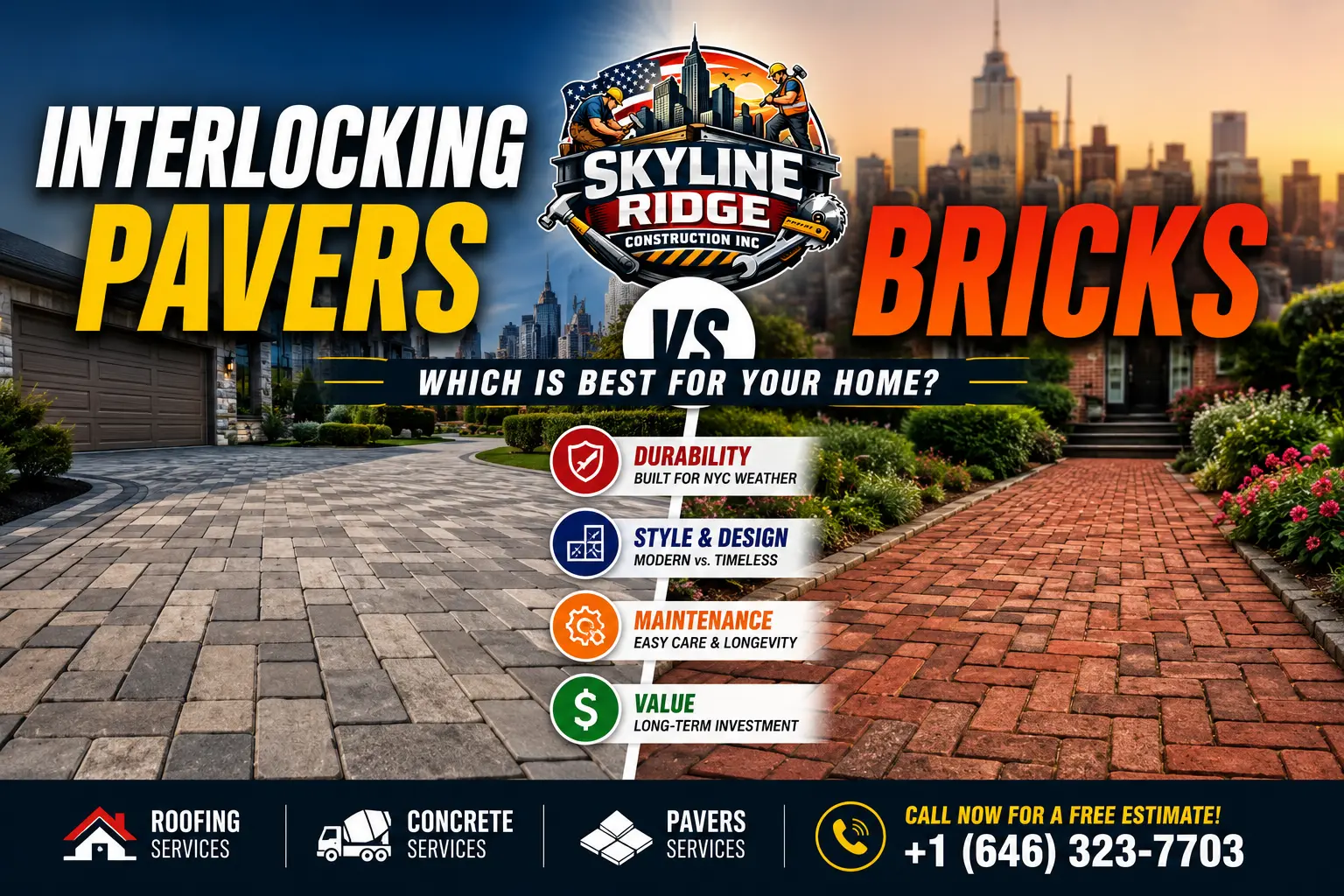
When it comes to upgrading your property’s driveway, patio, or walkway, choosing the right hardscaping material is a major decision. The debate of interlocking pavers vs. bricks is one of the most common dilemmas local homeowners face. Both options offer incredible curb appeal, but they differ significantly in terms of structural strength, maintenance needs, design flexibility, and how they handle New York’s demanding climate.
Selecting the wrong material can lead to premature cracking, shifting, and costly repairs down the road. Whether you want a modern, heavy-duty driveway or a charming, historic garden path, understanding the breakdown of interlocking pavers vs. bricks will ensure you make the best investment for your home.
This comprehensive guide compares both materials across durability, style, and performance so you can choose the perfect fit for your exterior space.
Table of Contents
Durability Comparison: Built for NYC Weather
The structural performance of your outdoor surface depends heavily on how well it resists weight pressure and severe climate shifts.
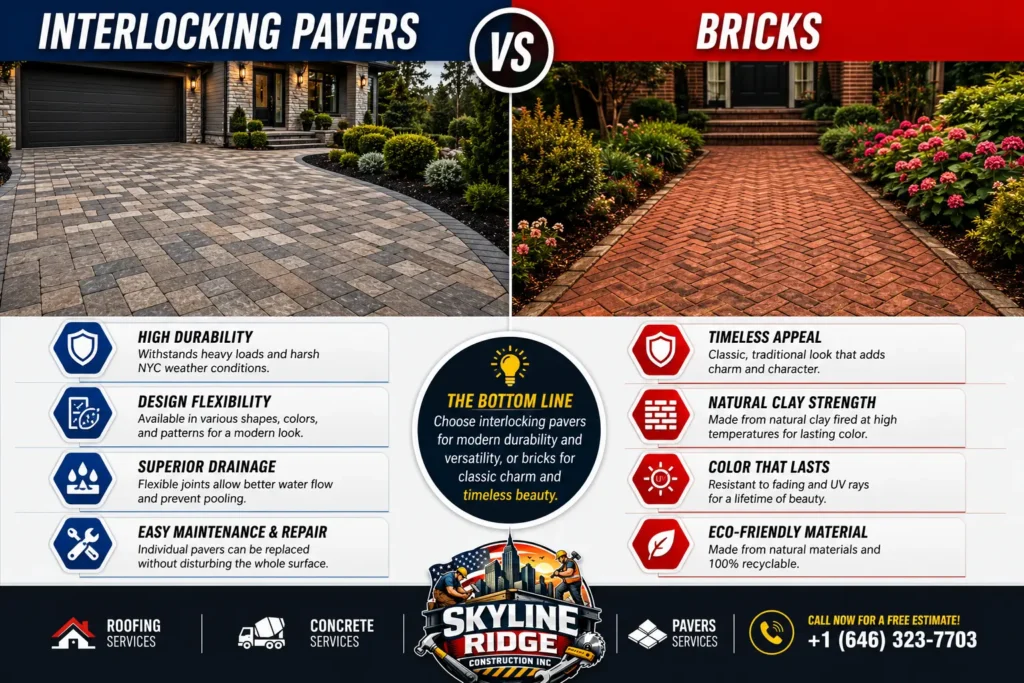
Interlocking Pavers: The Modern Powerhouse
Interlocking concrete pavers are engineered from high-strength concrete molded into specific interlocking shapes.
- Strength: They are incredibly dense and can withstand up to 8,000 PSI (pounds per square inch) of pressure, making them far stronger than poured concrete or clay.
- Freeze-Thaw Resistance: Concrete pavers are designed as a flexible system. The joints between them allow individual pieces to flex and move slightly during intense winter freeze-thaw cycles without cracking or shifting out of place.
Clay Bricks: The Timeless Classic
Traditional paving bricks are made from natural clay baked in a kiln at extremely high temperatures.
- Strength: While naturally strong (averaging around 4,000 to 5,000 PSI), clay is a more brittle material. Under the weight of heavy SUVs or commercial trucks, bricks are more prone to chipping or cracking over time.
- Weather Wear: Clay is naturally porous. In severe winters, moisture can seep deep into the brick, freeze, and cause the surface to flake or spall.
Style and Design Aesthetics
The visual impact of interlocking pavers vs. bricks comes down to whether you prefer unlimited modern customization or classic historical charm.
Design Versatility with Concrete Pavers
If you want complete control over the layout, colors, and textures of your hardscaping, concrete pavers are the clear winner. They come in dozens of shapes (rectangular, hexagon, ashlar patterns) and colors ranging from deep charcoals to earthy tans. They can even mimic the premium look of natural slate or granite flagstone, giving your property a highly customized, luxury look.
The Authentic Charm of Traditional Bricks
Bricks offer a rich, historic aesthetic that cannot be fully replicated by concrete. The color of clay bricks comes from the natural soil mixes used during manufacturing, meaning they resist UV fading perfectly and retain their warm red and burgundy tones forever. Bricks are ideal for traditional, rustic, or colonial-style architecture.
Regardless of which material you choose in the interlocking pavers vs. bricks debate, proper upkeep is the secret to protecting your curb appeal. Dirt, oil, and moss can damage both concrete and clay over time. To protect your investment from staining and shifting, make sure to read our comprehensive guide on Stone Pavers Maintenance: The Ultimate Guide for Long-Lasting Hardscaping to keep your layout secure.
Quick Comparison Guide
| Feature | Interlocking Concrete Pavers | Traditional Clay Bricks |
| Material Composition | Molded high-strength concrete | Kiln-fired natural clay |
| Weight Capacity | Extremely High (Up to 8,000 PSI) | Moderate (4,000 – 5,000 PSI) |
| Cracking Resistance | Excellent (Flexible joint design) | Moderate (Can chip or crack under heavy loads) |
| Color Longevity | Can fade slightly over decades if unsealed | Permanent (Natural clay color never fades) |
| Best Used For | Heavy-use driveways, modern patios | Historic paths, classic courtyards |
Complete Property Exterior Care Across NYC
At Skyline Ridge Construction Inc, we believe that premium property care requires expert workmanship from the roof down to the driveway layout. We are fully equipped to handle all your major exterior remodeling, paving, and masonry needs across New York City.
Explore our primary professional services to see how we can assist you today:
- Roofing Services: From emergency leak repairs to complete flat roof replacements, shingles, and commercial roof coatings, we keep your home safe from severe New York storms.
- Concrete Services: We specialize in high-strength concrete driveways, structural foundations, masonry repairs, and clearing NYC DOT sidewalk violations quickly.
- Pavers Services: Our team designs and installs premium stone paver patios, customized walkways, interlocking driveways, and traditional brickwork built to survive harsh winters.
Give Skyline Ridge Construction Inc a call today at +1 (646) 323-7703 to schedule a free estimate for your next hardscaping project!
Areas We Serve
We proudly provide expert paving, masonry, and exterior remodeling solutions across the following unique New York City neighborhoods:
- Bensonhurst (Brooklyn)
- Astoria Heights (Queens)
- Kensington (Brooklyn)
- Kew Gardens (Queens)
- Sunset Park East (Brooklyn)
- Elmhurst (Queens)
- Cobble Hill (Brooklyn)
- Rego Park (Queens)
- Dyker Heights (Brooklyn)
- Sunnyside (Queens)
FAQ’s
In the matchup of interlocking pavers vs. bricks, which is better for a driveway?
Interlocking concrete pavers are generally the superior choice for driveways. Because they handle up to 8,000 PSI of weight pressure and flex under heavy loads, they easily withstand daily vehicle traffic without cracking. Bricks are better suited for walkways, patios, and pedestrian areas.
Do clay bricks require different maintenance than concrete pavers?
Both require regular sweeping and weed control. However, concrete pavers benefit greatly from periodic sealing to protect their pigments from UV rays. Bricks do not necessarily need to be sealed for color protection, but sealing can help reduce water absorption and prevent moss growth in shaded areas.
Which option offers better drainage during heavy rain?
Standard installations of both materials allow minimal water drainage through their sand joints. However, if drainage is a high priority for your property to prevent local flooding, you should look into specialized systems. Check out our detailed article on Permeable Pavers: Why They Are the Best Solution for NYC Drainage Issues to see how custom-engineered stone systems manage heavy stormwater runoff.
Can I mix concrete pavers and clay bricks together?
Yes! A popular architectural trend is using traditional red bricks as a dark, contrasting border around a driveway or patio paved with lighter gray or charcoal interlocking concrete pavers. This gives you the best of both worlds: maximum modern durability with a classic accent.
Get a Free Estimate Today
Looking for a top affordable roofing and concrete contractor in Brooklyn, New York?
Address: 8512 5th Ave, Brooklyn, NY 11209