Concrete Lintel Repair in Queens: Essential Maintenance for Brick Buildings
Across the historic and residential neighborhoods of Queens, multi-family brick buildings, traditional row houses, and commercial storefronts dominate the architectural landscape. While brick masonry is incredibly durable, it relies on critical internal structural components to remain stable. Among the most vital yet frequently neglected elements are the lintels—the horizontal structural beams installed above windows, doors, and other wall openings to support the immense weight of the brickwork above. Investing in professional concrete lintel repair is essential to prevent structural shifting, stop water infiltration, and avoid dangerous masonry collapses.
Over decades of exposure to New York’s shifting seasons, concrete lintels can crack, weather, and degrade. When a lintel fails, the masonry load it supports begins to sag and exert outward pressure, causing surrounding bricks to displace.
This comprehensive guide explains how concrete lintels function, the signs of structural failure, and how professional remediation protects the structural integrity of your brick building.
Table of Contents
What Is a Lintel and Why Does It Fail?
A lintel acts as a hidden structural bridge. Without it, the weight of the brick masonry directly above a window or door frame would crush the casing, causing the opening to buckle and collapse inward. While lintels can be constructed from steel or stone, precast concrete lintels are incredibly common in Queens properties due to their high load-bearing capacity.
The Primary Causes of Concrete Lintel Degradation:
- Internal Steel Rebar Corrosion (Spalling): Precast concrete lintels are reinforced with internal steel bars to handle tension. Because concrete is porous, moisture slowly penetrates the beam over time. Once that steel rusts, it expands up to ten times its original size, cracking and breaking the concrete apart from the inside out.
- The Freeze-Thaw Climate Strain: Rainwater or melting snow that seeps into tiny hairline fractures along the lintel freezes solid during winter drops. The expanding ice forces the cracks wider every single year until large chunks of concrete begin to flake off.
- Building Settlement and Stress: As older buildings naturally settle into local soil sub-grades, shifting structural loads put intense twisting pressure on rigid concrete beams, leading to deep structural fractures.
Critical Signs Your Queens Building Needs Lintel Repair
Catching a lintel failure early saves property owners thousands of dollars in emergency masonry reconstruction. Watch for these three warning signs:
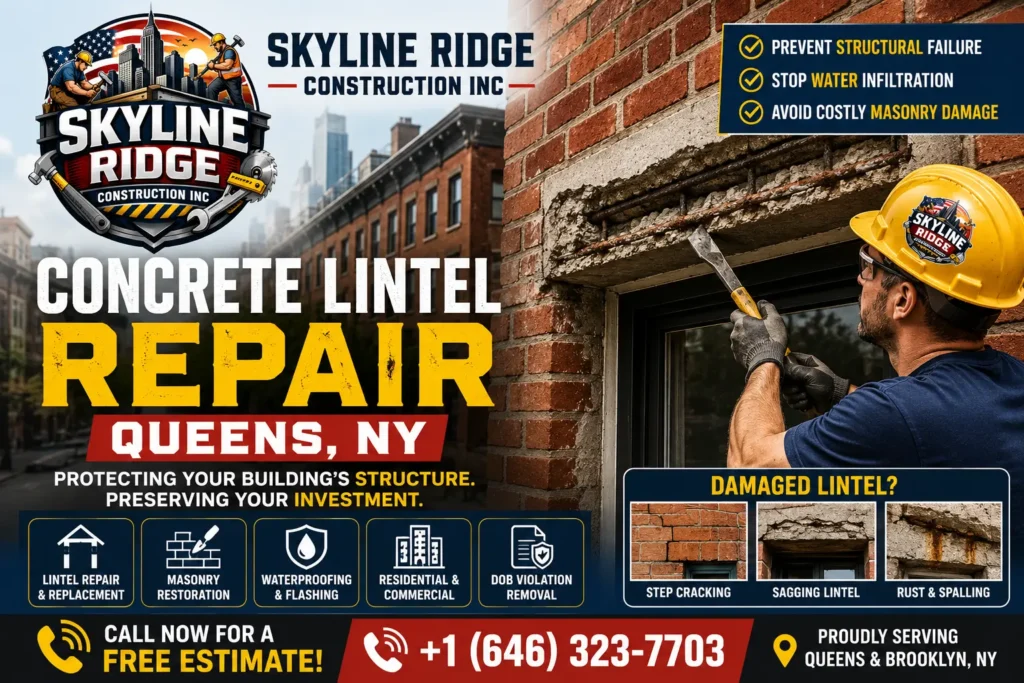
“Step Cracking” in the Surrounding Brickwork
When a concrete lintel sags or loses its structural capacity, the bricks directly above it lose their support foundation. This forces the masonry to shift, creating distinct diagonal or staircase-shaped cracks (step cracking) radiating upward from the top corners of the window or door frame.
Deflecting, Sagging, or Crushed Window Frames
If you notice that a window or exterior door is suddenly difficult to open, close, or lock, the lintel above may be bowing downward under the weight of the building facade, actively crushing the underlying frame structure.
Bulging or “Bowing” Brick Walls
As a broken lintel rotates or loses its seat inside the wall cavity, the brick facade directly around the opening will often begin to push outward, creating a noticeable bulge. A bulging brick wall is a severe structural hazard that requires immediate emergency stabilization.
Entryway and Lower Level Structural Alignment: Ensuring that upper structural elements like lintels are fully stable is the first phase of securing your property’s exterior envelope. If a failing lintel allows moisture to travel down through the wall cavity, that unmanaged water will slowly seep into lower structures, ruining entryways, stoops, or walkways below. To see how to properly engineer and finish your street-level masonry elements safely, read our comprehensive walkthrough on How to Choose the Right Concrete Finish for Your Brooklyn Stoop or Stairs to balance curb appeal with long-term safety.
The Professional Repair and Replacement Process
Mending a structural load-bearing beam requires specialized engineering, temporary shoring, and precise masonry execution:
- Structural Shoring and Support: Before touching the lintel, a professional crew installs heavy-duty temporary shoring posts to support the weight of the upper brick facade safely.
- Masonry Removal and Extraction: The mortar joints surrounding the damaged beam are carefully cut away, the compromised bricks are removed, and the crumbling concrete lintel is extracted from the wall cavity.
- Installing High-Strength Reinforced Units: A new, premium precast concrete lintel reinforced with epoxy-coated, rust-resistant steel rebar is precisely leveled and seated into the structural wall jacks.
- Rebuilding the Brick Facade: The original brickwork is laid back into place using specialized mortar tinted to match the building’s historic aesthetic, and integrated flashing is installed to guide future water away from the beam.
Concrete Lintel Repair vs. Total Replacement
| Damage Severity Level | Recommended Action | Structural Outcome |
| Minor surface cracks, light efflorescence, no brick displacement | Structural Patching & Epoxy Injection | Seals out moisture; halts internal rebar rust before it spreads |
| Deep horizontal fractures, exposed rusted rebar, sagging brickwork | Full Structural Lintel Replacement | Restores 100% load-bearing capacity; stabilizes the facade permanently |
Complete Property Exterior Care Across NYC
At Skyline Ridge Construction Inc, we specialize in protecting your entire building layout from the highest structural concrete lintels down to your sidewalk pavement. We are fully licensed, locally operated, and equipped to manage your residential structural home improvements, commercial roofing, masonry restorations, and DOT concrete compliance.
Explore our primary professional services to see how we can assist you today:
- Concrete Services: We specialize in structural concrete lintel repairs, custom entryway stoops, high-strength driveways, basement waterproofing, and clearing NYC DOT sidewalk violations quickly and legally.
- Roofing Services: From emergency leak repairs and protective flat roof coatings to complete roof replacements and custom chimney flashing, we keep your home dry.
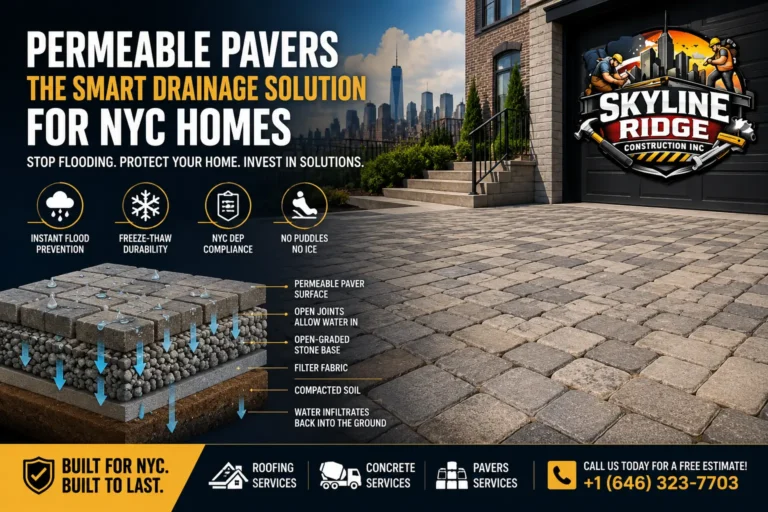
- Pavers Services: Our team designs and installs premium stone paver patios, customized walkways, interlocking driveways, and traditional brickwork built to survive harsh winters.
Give Skyline Ridge Construction Inc a call today at +1 (646) 323-7703 to schedule a free estimate for your next concrete lintel repair or masonry renovation project!
Areas We Serve
We proudly provide expert local concrete repairs, structural roofing, and premium brickwork solutions across the following unique New York City neighborhoods:
- Astoria South (Queens)
- Kensington Heights (Brooklyn)
- Jackson Heights North (Queens)
- Midwood East (Brooklyn)
- Rego Park South (Queens)
- Dyker Heights East (Brooklyn)
- Sunnyside Center (Queens)
- Bath Beach West (Brooklyn)
- Ridgewood South (Queens)
- Mapleton North (Brooklyn)
FAQ’s
Is a lintel violation issued by the NYC DOB dangerous?
Yes, an unsafe masonry or lintel condition can trigger an immediate Department of Buildings (DOB) structural violation. If loose bricks or crumbling concrete fragments pose a threat of falling onto public sidewalks, the city can mandate emergency scaffolding installations and issue heavy fines until a licensed contractor repairs the hazard.
How long does it take a professional team to replace a window lintel?
For a standard residential window opening, a full replacement including shoring, masonry work, and cleanup typically takes 1 to 2 days. Large commercial structural openings or multi-window groupings may require additional time for customized precast concrete curing.
What is lintel flashing and why is it critical?
Lintel flashing is a waterproof membrane installed directly on top of the concrete beam inside the wall cavity. It features tiny exit holes (weep holes) in the mortar line, ensuring that any water traveling down through the porous brick facade is captured and routed out of the building safely, keeping the concrete beam dry.
Can foundation water pressure or poor basement sealing cause upper wall shifts?
Yes, absolutely. If a property is suffering from extensive hydrostatic pressure and lacks proper below-grade sealing, the foundation can shift unevenly. This foundational movement travels upward through the entire structural framing, putting immense pressure on your upper concrete lintels and masonry joints. To ensure your home is fully secured from the ground up, check out our guide on Professional Basement Waterproofing & Concrete Sealing for NYC Homes.
Get a Free Estimate Today
Looking for a top affordable roofing and concrete contractor in Brooklyn, New York?
Address: 8512 5th Ave, Brooklyn, NY 11209